Allergy stickers - allergen labels and stickers to protect people with allergy
People suffering from an allergy is not uncommon, particularly children. Most allergic reactions result in mild symptoms but some can be truly debilitating, sometimes even life threatening which can make one's day-to-day challenging with the need for precautions and a significant amount of label reading. An allergy, specially a more severe allergy, can be the source of tremendous worry for parents leaving children at nursery or school where you have to rely on a teacher to remember that your child cannot eat something. This is why allergen labelling and allergy stickers are so important. Continue reading below to learn more about the most common allergies, their symptoms and how allergy sticker help, as well as how and where to use them.
Importance of food allergen labelling
According to AllergyUK an alarming 44% of British adults suffer from at least one allergy. And 40% of children have an allergy with 1 in 12 suffering from a food allergy. AllergyUK also states that the risk of life-threatening food allergy is more significant in children (5-8%) than in adults (1-2%). Click here for more information about allergy statistics in the UK.
*Image here of allergy statistics in the population graph e.g. 44% of adults (MOCK UP)*
Being allergic to a particular ingredient means you must ensure that the food you or your child consumes does not contain said ingredient, which is why food labels are so incredibly important. If you are a shop, restaurant, or cafe owner, using food labels on your packaging is a must to protect people with allergies. In fact, everywhere that serves food must adhere to Natasha’s Law. This legislation requires businesses to label all food products with a full list of ingredients and the 14 main allergens emphasised in bold. An easy way for businesses to do this is by using tickable food allergy alert labels. These food labels include tickable boxes for the 14 main allergens enabling businesses to inform customers of exactly what allergens are present in each item. These stick-on labels are also suitable for any kind of food packaging. To find out more about the guidelines and precautions for businesses visit the Food Standards Agency website. Or to read more about Natasha’s Law visit the Natasha Allergy Research Foundation page.
*Image here of standard tickable food label (MOCK UP) e.g., click here *
Tick the boxes on the food.gov downloadable allergen chart template for each of the 14 allergens present within the ingredients of each of your food products. This can then be used to label food products to correctly identify to customers what allergens are in the product. However, remember that it is important to stay up to date and repeat the process whenever recipes change or when you introduce new food products.
The list of 14 allergens which, if contained in the food product, must be written in bold is as follows:
Celery
Sulpher Dioxide
Soybeans
Mustard
Peanuts
Gluten
Crustaceans
Eggs
Lupin
Fish
Milk
Molluscs
Sesame
Sulphites
Tickable allergy labels for food items can be purchased on Amazon. They are also available for purchase on theDaymark Supplies website.
How to use food allergen labels to alert people with allergy
As a person with an allergy, or as the parent of a child with an allergy, it is important to read food labels properly. Not only must you look out for the ingredient you or your child is allergic to but you should also pay attention to the ‘hidden allergens’ that may be present. For instance, ‘whey powder’ derives from milk which is an allergen. However, as many people are unaware that ‘whey powder’ contains the allergen, this goes unmarked. To read more about hidden allergens visit AllergyUK.
‘Precautionary labelling’ is also important to consider. ‘May contain x’ is an example of precautionary labelling and fFor some people with allergies, particularly severe allergies, these food products are to be avoided. To find out more visit food.gov.uk’s precautionary labelling page.
*Image here of ingredients list on food packaging (MOCK UP) e.g.click here.*
It is important to note that there are many other allergens which are not included in the 14 main allergens list. Examples of these allergens include alcohol, corn, and lentils. Because these are not included in the 14 main allergens list, they do not have to be emphasised in bold on the food label. However, they will still be shown on the ingredients list in smaller font. Nonetheless, for people with an allergy to allergens not included in the top 14, it is essential to carefully read food labels. Read more about other allergens on the AllergyUK page.
*Image here of examples of other allergens like corn and lentils (MOCK UP). e.g.click here.*
Most common food allergens in the UK
Approximately 90% of allergic reactions are caused by 6 main food groups, these are: dairy, eggs, wheat/gluten, nuts, seafood, and shellfish. However, there are also other allergens affecting many people every day. The 12 most common allergies in the UK are as follows:
*Multiple images of our icons to the left of the name of each allergen e.g. the drop down for Egg allergy should have the icon I-97-251 as png image to the left of the text*
A large number of reactions to this allergen occur due to the egg white’s high protein content. In babies and young children, eggs are a common trigger for allergic reactions. In most cases, children outgrow egg allergies, however this is not always the case.
Seafood such as fish contain certain types of proteins which some people’s immune systems consider a threat. This causes a chemical called histamine to be released causing an allergic reaction.
While many of us love our pets, there are people that have allergic reactions when exposed to the dead skin found within the fur that our pets shed.
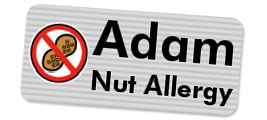
Pistachios, pecans, cashews, hazelnuts, almonds, and walnuts are likely to affect children and adults with a nut allergy. This is because the immune system of people with a nut allergy overreacts to the nut’s proteins.
Pollen is a fine powder-like substance produced by plants and trees. When it is inhaled by people with a pollen allergy it can produce symptoms like a runny nose, itchy eyes, and a sore throat.
Shrimp and other shellfish contain proteins which the immune system of someone allergic can mistake as a threat causing it to react defensively against said proteins.
The seeds of the lupin flower are used to make lupin flour. This flour is commonly used in pastries. While it is suitable for people with a gluten intolerance, many people are allergic to lupin due to its proteins.
Derived from the soya bean, the high protein food can cause allergic reactions from immune system overreactions. These effects can be either immediate or delayed.
Many foods and drinks contain sulphites for their preservative qualities. However, for people with a sulphate allergy, symptoms such as asthma and lung irritation can occur.
Sesame allergy is increasingly prevalent due to its escalated use in foodstuffs. Like with many other allergens, sesame contains proteins which the immune system can confuse as a threat causing the release of histamine.
The proteins within celery can often be mistaken for pollen by the immune system. This can cause an allergic reaction with symptoms similar to that of a pollen allergy. In most cases however, allergic reactions can be avoided by cooking the celery.
For those who are allergic to wheat/gluten coeliac disease can occur after consuming wheat/gluten. Coeliac disease results in unpleasant symptoms when the immune system attacks the small intestine.
Some of the proteins within milk can cause some people’s immune system to release antibodies called immunoglobulin. These fight the proteins causing unpleasant symptoms.
Food allergy symptoms - allergic reactions
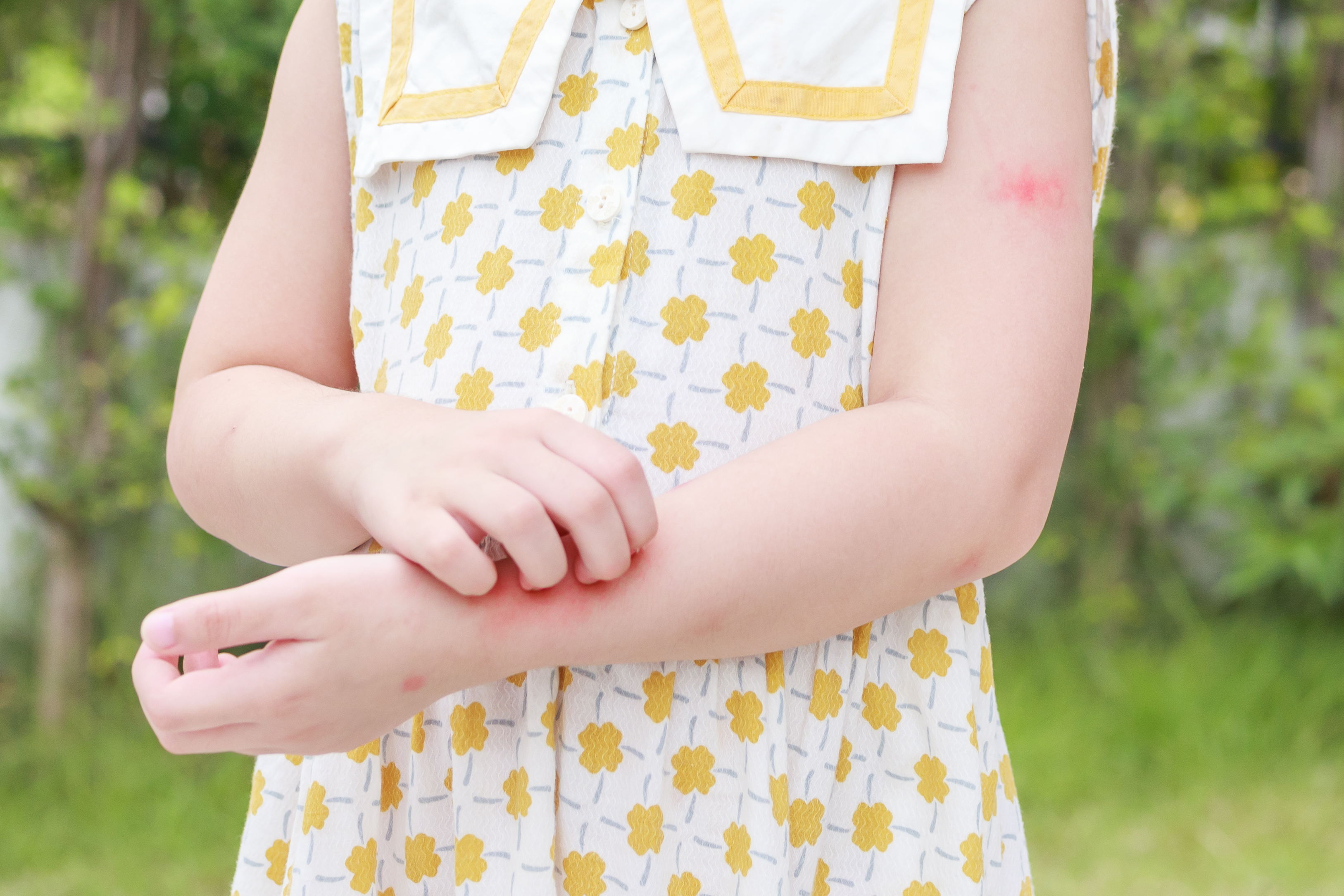
An allergic reaction occurs when the immune system produces antibodies for an allergen it considers harmful. According to AllergyUK the symptoms of a food allergy could be very severe (anaphylaxis) or mild, and the seriousness of each reaction can fluctuate. These reactions generally affect the sinuses, skin, and digestive system but many other symptoms are possible. Find out more about the symptoms of allergies on AllergyUK's website.
If someone is showing symptoms of anaphylaxis (a severe allergic reaction) then you can take action to help them.
Firstly, lay the person on their back and hold their legs up.
Secondly, if an adrenaline auto injector is available then immediately use it.
Thirdly, call 999 and wait with the person until help arrives.
If an adrenaline auto injector is not available then call 999 immediately and wait with the person until help arrives.
If the first dose of adrenaline has not improved their symptoms after 5 minutes then give them a second dose.
Depending on how someone with an allergy has been exposed to an allergen (e.g., by skin contact, consumption or by inhalation) the symptoms' recovery time can vary. Equally, the type of allergen can also influence this.
Even if you have previously purchased a food product that you consider safe, always check the food label. Always check the food label of food products you have never bought before. Be careful of packaging or wording changes such as ‘improved recipe’. This may mean the ingredients have changed. If you have not bought a food product in some time, check the food label. The ingredients may have changed. If you are buying a loose food product from places like a market, ask about their measures to prevent cross contamination. If you have checked the label and you have asked about the allergen content of a food product but you are still unsure, it is best to avoid it.
*Image from the allergies section in MN google drive/allergy)*
Food Intolerances
Certain types of food can cause reactions in some people. These reactions are known as intolerances. Generally, a food intolerance is a result of foods not being digested by your body whereas an allergy is caused by an immune system reaction or antibodies. Food intolerances are not life-threatening, however sufferers can have very unpleasant symptoms which can appear days after consuming the food responsible. The best way to manage a food intolerance is to avoid problem foods by reading food labels carefully. Find out more about food intolerances.
Stickers for children with allergies - allergen stickers
For the families of children with allergies, making sure that they are safe can be stressful, constantly monitoring and worrying. This is especially true when children are exposed to new environments such as joining a new school or going on a school trip. This is because young children may not be able to properly express their condition to others. Or they may be unaware of which allergens they must avoid in their food or drink. Therefore, using allergy stickers on their person to inform carers, teachers and everyone else of your child’s allergies is important to keep them safe from having a dangerous allergic reaction.

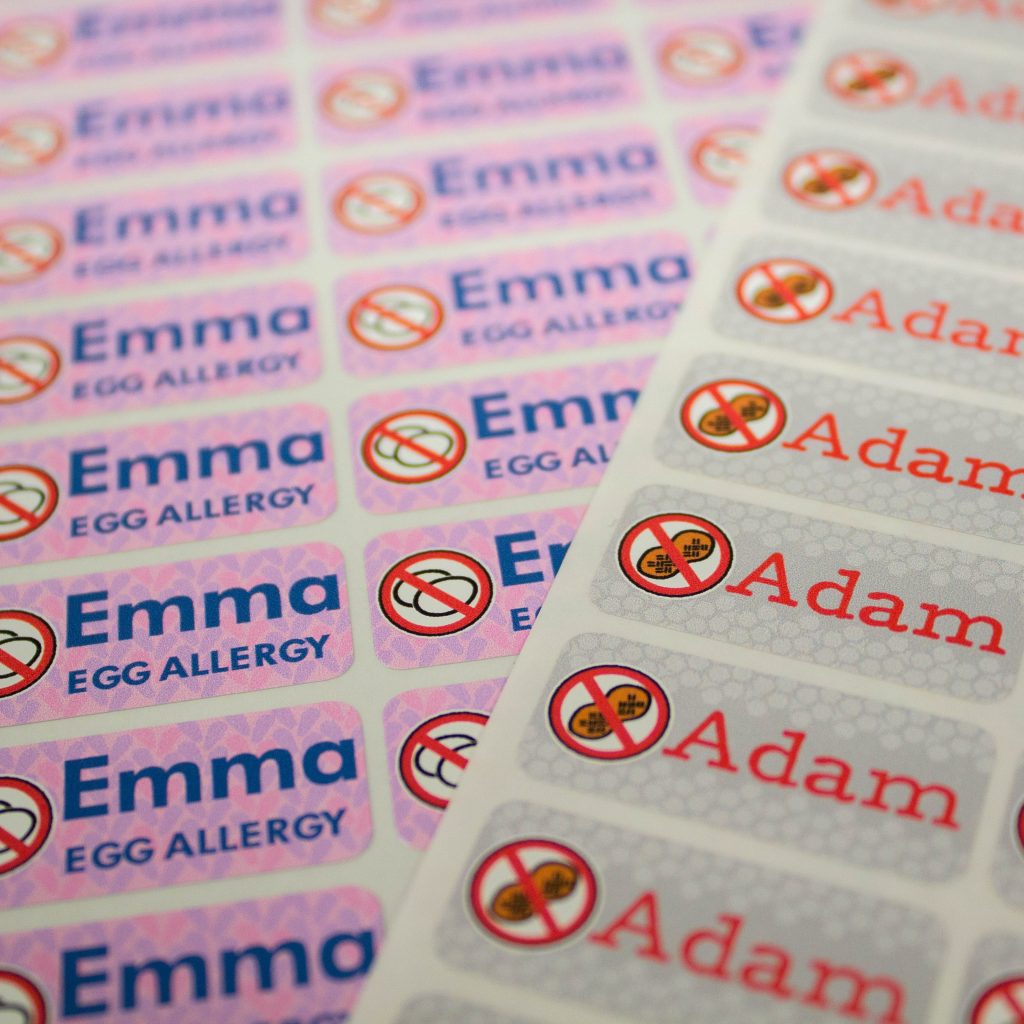
My Nametags, partnered with AllergyUK, makes the best allergy labels for children. These allergy stickers can be personalised with various types of allergy alerts as well as with a range of fun and colouful, backgrounds, and fonts. My Nametags labels are also washing machine, dryer, dishwasher, microwave and water proof meaning the food allergen labels will not budge and will always keep your child safe. The My Nametags personalised allergy medical alert stickers range also covers all of the UK’s 12 most common allergens to protect children with different types of allergies.
*Multiple images here of My Nametags allergen labels for each of the 12 allergens + internal links to the colour stickers design page e.g.img from the allergies section in MN google drive/allergy*
Where should an allergy alert sticker be used?
Some of the best places to add allergy alert stickers is on lunchboxes, clothing, bags, packs, medical equipment, and bottles. However, they could also be added to any other item you feel would be helpful to alert others. The My Nametags range offers easy to apply stickers or iron-ons. See how to apply them to different surfaces below to decide which type is most suitable for your child.
On Clothing:
1. Firmly stick the nametag to the care label – not suitable for fabric.
2. Allow 24 hours before washing the item.
3. Stickers are washing machine safe up to 60°.
On Equipment:
1. Stick the label to a clean and dry hard surface.
2. Allow 24 hours before placing the item in a dishwasher.
Read more on how to apply colour sticker labels.
On Clothing:
1. Remove label from the transparent backing sheet.
2. Place nametags on garment and cover with silicone paper provided.
3. Heat iron to maximum temperature for the garment.
4. Turn off the steam setting and hold the iron over the label for 8-15 seconds
5. Remove silicone paper and allow to cool. Read more on how to apply iron on labels.
*image from the allergies section in MN google drive/allergy.*
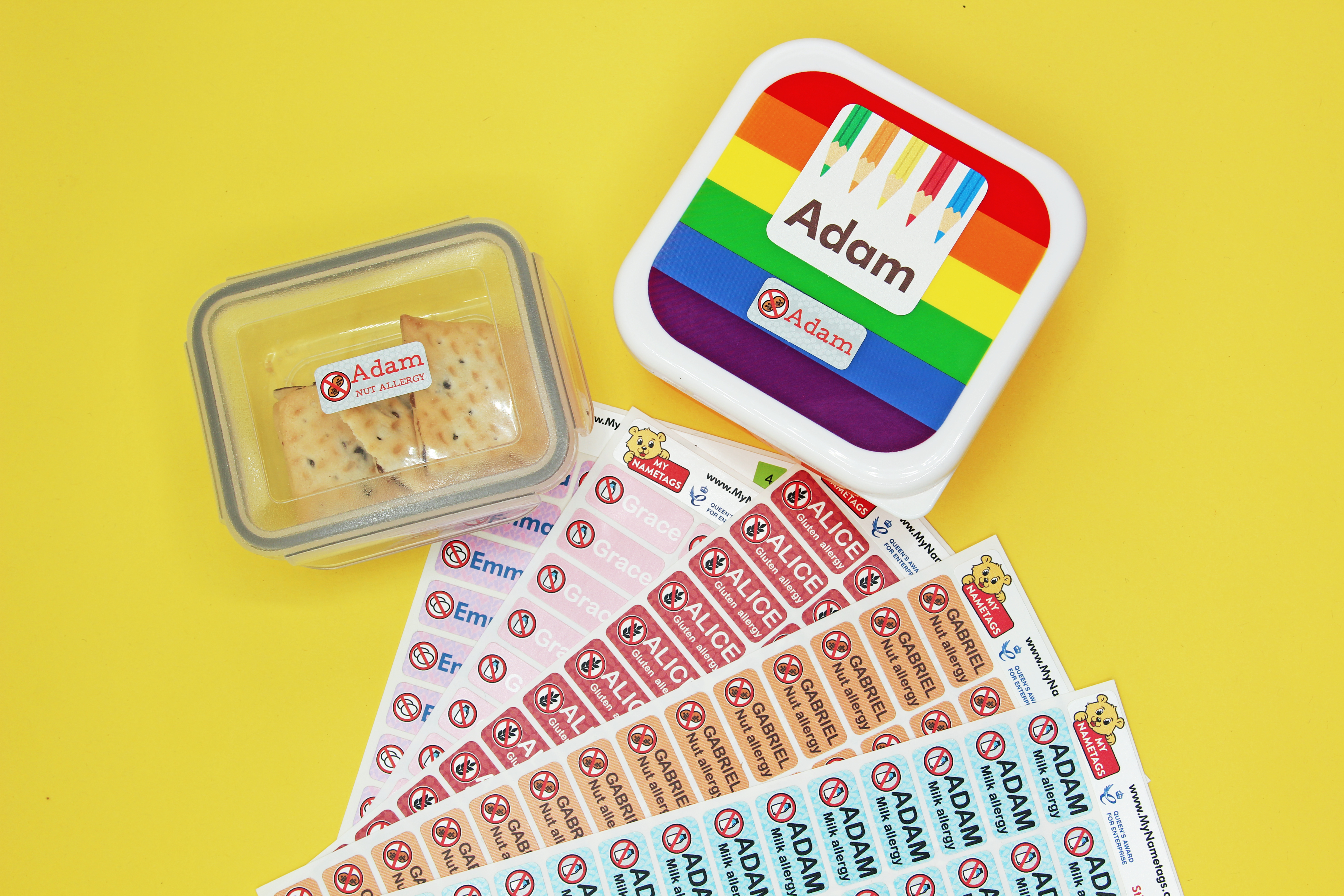
My Nametags allergy stickers
My Nametags labels have a 10-year washing guarantee which is unmatched in the nametags market. We have an almost 100% customer satisfaction rating which is also unmatched among label companies. We have been independently tested to have the best name labels in Europe. Our colour sticker labels stay on clothing better than any other labels we know of. We don't use any animal products in our labels. We are also the only company making antibacterial labels. We cover our labels with an antibacterial layer which has been tested to be antibacterial by the Industrial Microbiological Services and have been awarded a certificate under ISO 22196 (Measurement of antibacterial activity on plastics and other non-porous surfaces). Only the best material and adhesive is used by My Nametags to ensure your labels stay stuck, resist abrasion and survive your child's day-to-day life.
The Allergy UK helpline is there to provide you with information, help and advice on allergies. Their team can help you to find your nearest NHS consultant or allergy clinic and their in-house team of clinical experts can also assist you with complex questions. Visit Allergy UK’s helpline page.
Allergy UK offers a specialist dietitian service for allergy advice. This service is available to the parents of children who have symptoms of allergy. To be able to use this service your child must be aged 0-5, must be currently showing symptoms of a food allergy and must not have previously been referred to a dietitian. Visit Allergy UK’s dietitian service page.
Allergy UK offers a list of approved products which are reviewed and independently tested by Allergy Research LTD to make the lives of people with many different types of allergies more manageable. Read more about Allergy UK’s approved products.
Occasionally food products can be recalled if they pose a threat. Oftentimes this is due to incorrect allergy labelling or cross-contamination. Allergy UK is provided with the latest information about such incidents by the Food Standards Agency as they happen. They then posts these updates on social media and on the Allergy UK website. However, if you would like to receive emails about the latest alerts for a particular allergen, sign up on the Allergy UK alerts page.
Click here to donate to Allergy UK so they can continue to help people living with allergies. You can donate immediately or you can raise money for Allergy UK using Amazon Smile, Savoo, Give as you Live, Wegiveit, Everyclick, or Give a Car.


